Digital Business Cards as a Sustainable Alternative? An Analysis (2025)
How sustainable are digital business cards really? We compare paper cards and digital solutions across resources, CO₂ and waste, with concrete figures.
Publié le 6 mars 2025 · 4 min de lecture
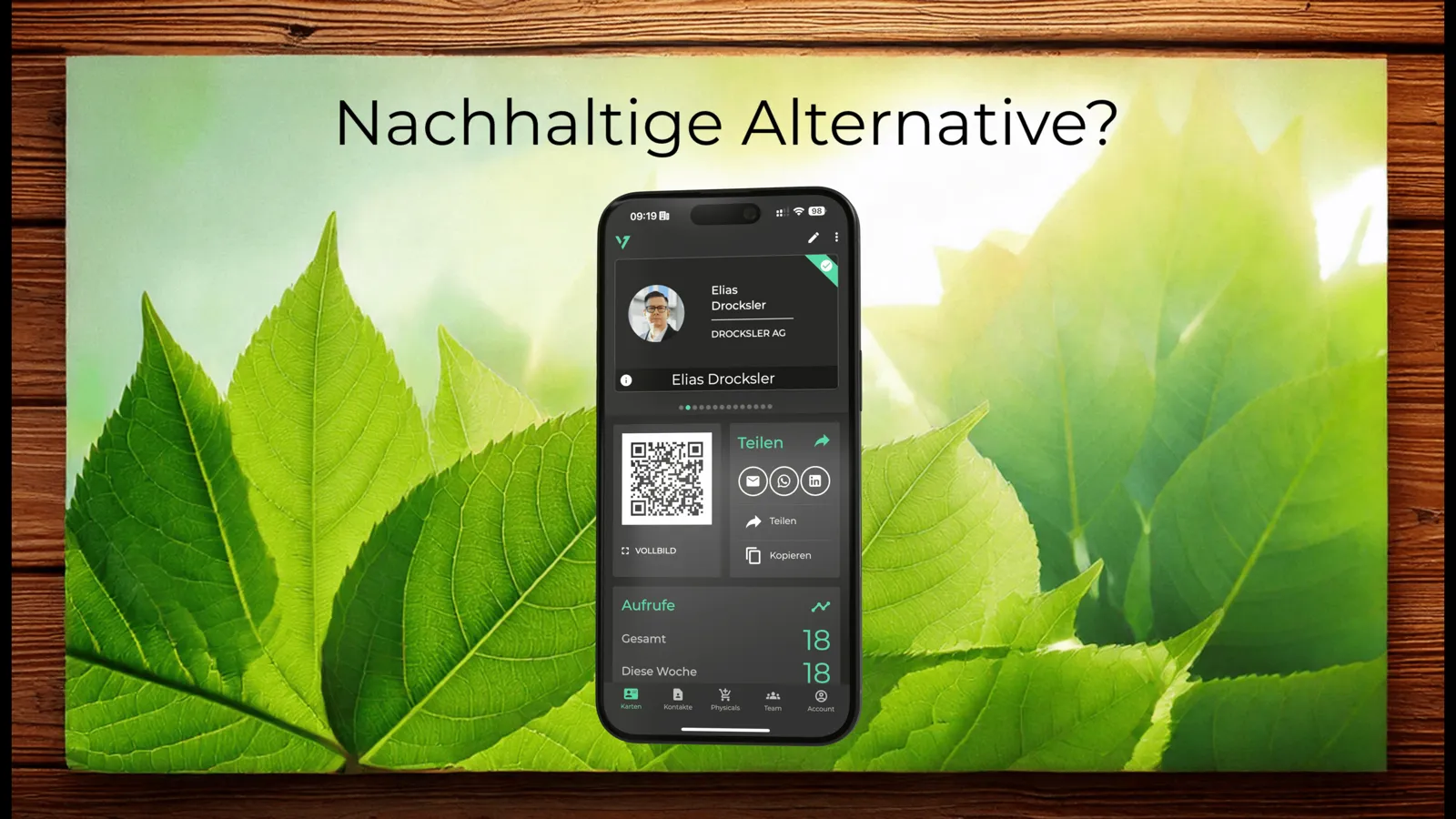
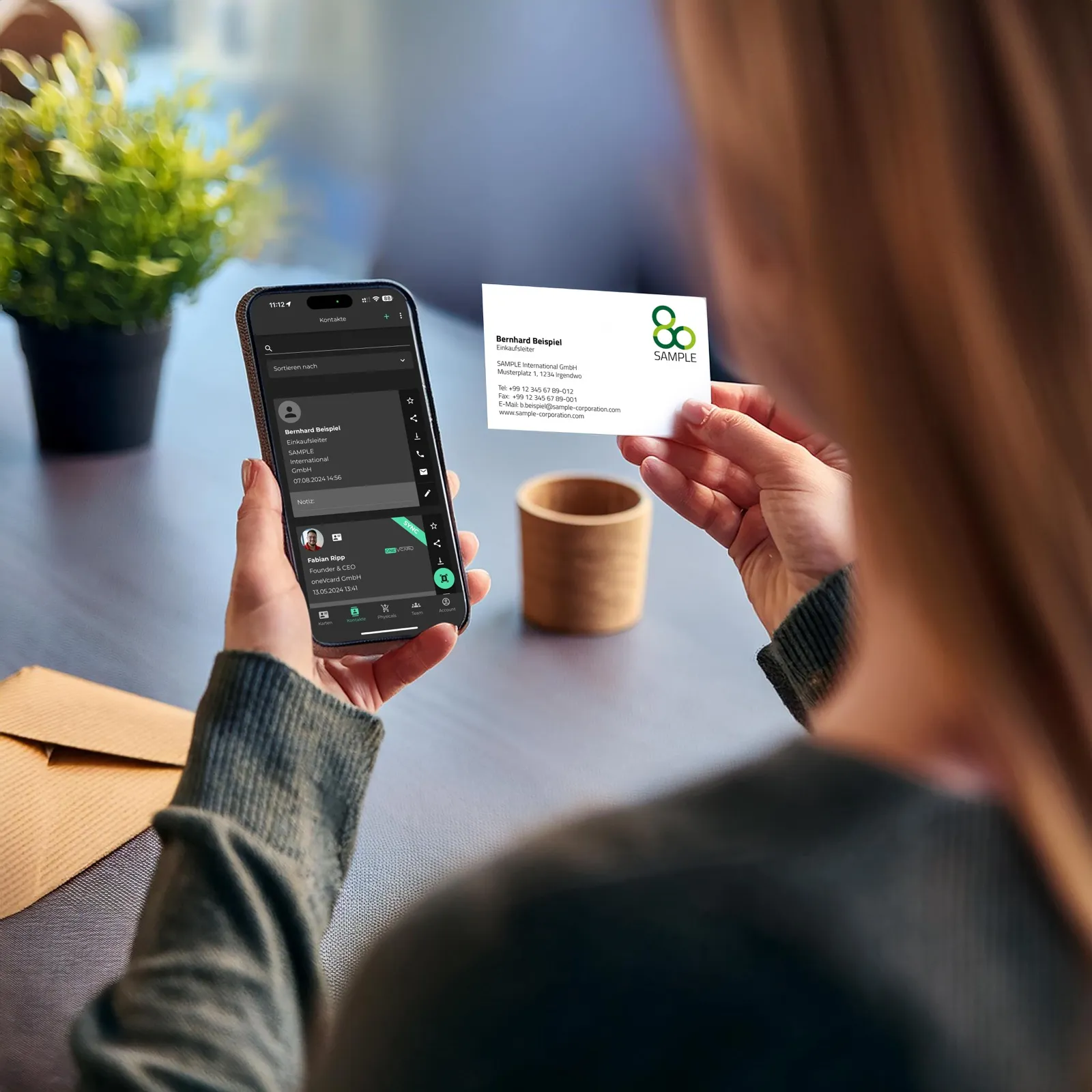
Digital business cards are an innovative and sustainable alternative to the classic paper business card. Instead of printing and handing out cards, contact details are shared digitally, via QR code, NFC technology or a link. In this analysis we look at how big the difference for the environment really is.
What Are Digital Business Cards?
Unlike their physical counterparts, digital business cards offer almost unlimited capacity for personal, professional and social data. You can add links to social networks, files or videos. This dynamic nature makes them especially valuable in a digital age where information has to stay up to date at all times.
Changes are possible in real time: a new phone number or job title? You update your details in just a few clicks, with no need to create new cards. That cuts costs and saves resources. With oneVcard Teams, a company can even adjust all cards centrally. If the logo changes, it is swapped across every business card in a few clicks, instead of destroying thousands of paper cards.
The Ecological Footprint of Traditional Business Cards
Paper cards may seem harmless at first glance, but their production consumes wood, water and energy. On top of that come bleaching agents and dyes in the printing process. A worked example:
- Paper weight: usually 300 g/m².
- Paper consumption: A company with 100 employees, 100 cards each, needs around 14 kg of paper.
- Wood consumption: One cubic meter of wood yields about 800 kg of paper on average, so 14 kg equates to roughly 0.0175 m³ of wood.
- CO₂ emissions: 14 kg of paper accounts for 14 to 21 kg of CO₂, comparable to about 140 km of driving (6 l/100 km).
Even recycled paper reduces CO₂ emissions by only up to 50 percent. With digital business cards, by contrast, they can be avoided entirely. And we have not even factored in transport from the print shop to the company, along with the packaging waste.
Calculate your own consumption with our sustainability calculator.
Transport, Distribution and Waste
After printing, cards are often transported over long distances and packaged in plastic or cardboard. Both cause emissions and waste. Many paper cards also end up in the bin after just a few days, because details change or the cards get lost. Coatings and lamination make recycling even harder.
oneVcard’s digital business cards solve this: they are shared via QR code or NFC, the entire transport and packaging effort disappears, and they last indefinitely.
Environmental Benefits of Digital Business Cards
- No paper or plastic waste: purely virtual, so no deforestation, no chemicals, no packaging waste.
- Less CO₂: no printing, no transport, no disposal. oneVcard’s data center runs on green hydropower.
- Durable and flexible: updatable at any time. Physical NFC cards made of metal or plastic are designed for years of use.
Sustainability and Efficiency in Everyday Business
Digital solutions save not only resources but also time and money. Instead of reprinting, you maintain a single card. Your contacts save all the details straight to their smartphone, error-free and without retyping. You can also embed links to social media, your website, videos or presentations, leaving a lasting impression.
Server Infrastructure and Sustainability
Of course, digital solutions need infrastructure too. Their resource consumption is, however, far lower than the production and distribution of paper cards. oneVcard’s GDPR-compliant data center in Germany runs entirely on green hydropower and relies on energy-efficient cooling, intelligent load balancing and virtualization.
Market Trends
Acceptance of digital business cards is growing strongly, driven by digitalization and environmental awareness. Younger generations and tech-savvy industries in particular are driving this change. We expect digital business cards to become the new standard in the years ahead.
Frequently Asked Questions
What makes digital business cards more sustainable than paper cards? They avoid paper and plastic consumption entirely and save the resources needed for production, transport and disposal.
Are digital business cards secure? Yes. At oneVcard, data is transmitted encrypted and stored in an ISO 27001 certified data center in Germany.
Are there physical options? Yes, durable NFC cards made of metal or plastic, which can likewise be updated digitally.
Conclusion
Switching to digital business cards is a decision for greater efficiency and a clear step toward sustainability. You avoid paper consumption, reduce CO₂ and benefit from features that paper cards simply cannot offer.